
Menu

Inca Trail Trek 4 Days

Unforgettable experience for your vacation

Inca Trail Trek

Inca Trail to Machu Picchu

Inca Trail Trek 4 Days
  • Type: Trekking
  • Duration: 4D/3N
  • Distance: 43 km
  • Season: From March to January
  • Departure: Check Availability
  • Minimum of Passengers: 2 people

Inca Trail Information

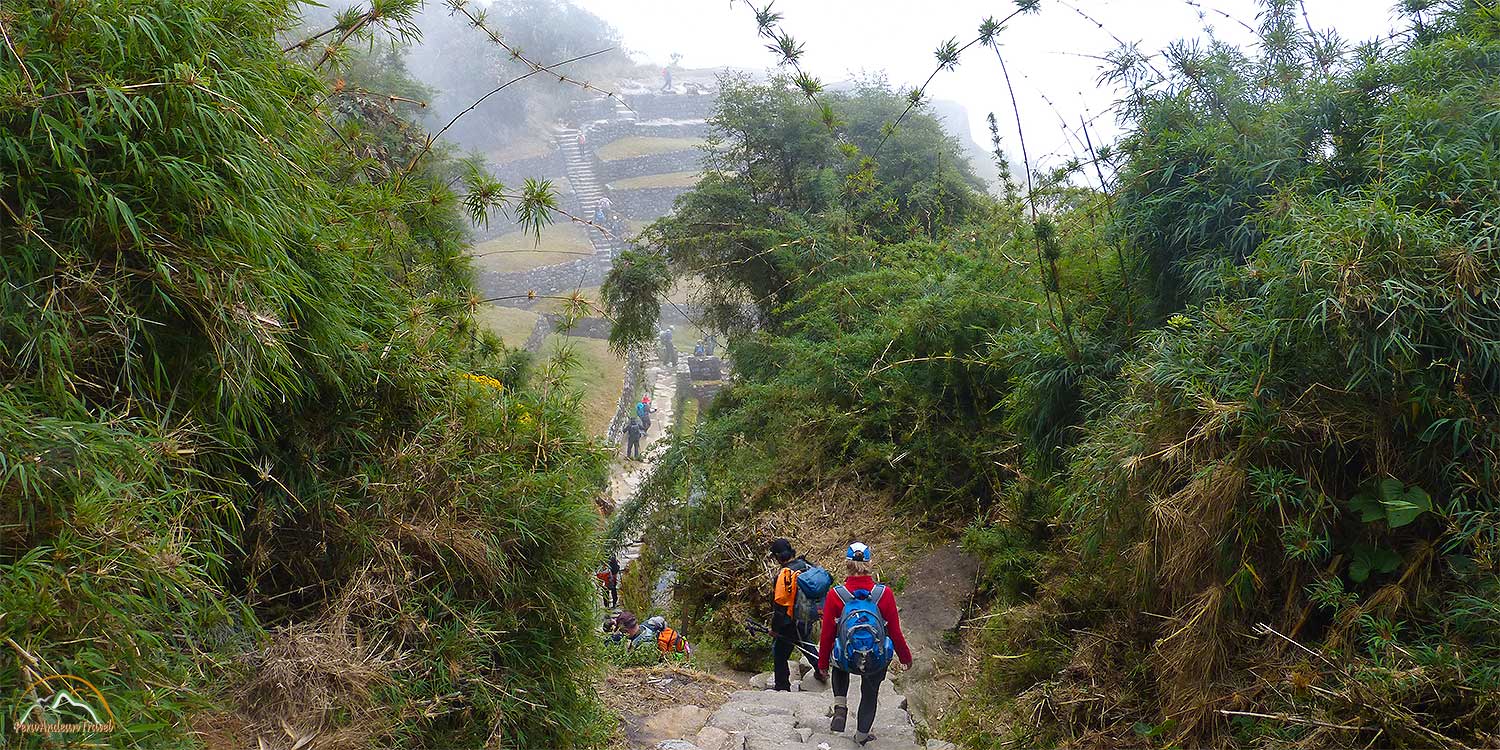
Classic Inca Trail Trek 4 Days is the most famous trek in the world, Every year the Inca Trail to Machu picchu is walked by thousands of adventure lovers searching for a special nature and historical experience. Although the totaldistance is only about 45 km.

In walking the Inca Trail to Machu picchu one travels back in time, retracing the steps of the Inca People themselves, while taking in the unparalleled natural surroundings. You do not find other circuit on earth combines such geographic diversity, ranging from the Peru Andean Mountain range to the amazon forest, with the archaeological ruins of an ancient culture in such a harmonious manner.

Inca Culture built a vast network of paths to connect different parts oof their regions which extended for more than 30.000 km. They rebuilt and enlarged the ancient road network and transformed it into the state who maintained control of the infrastructure due to its important economic, political and military functions.

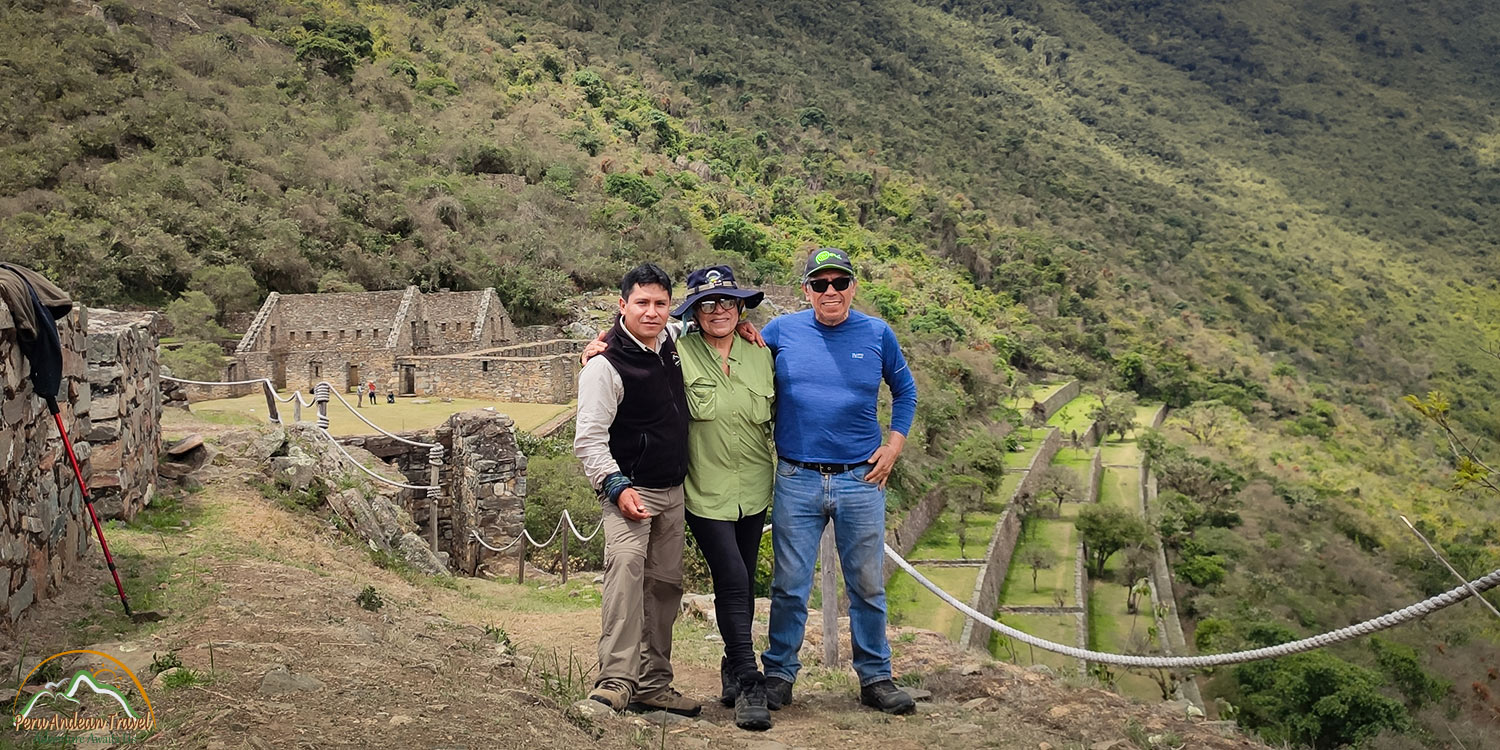
Peru Andean Travel is an authorized Travel Agency to operate Inca trail 2025 and Choquequirao Trek 4 days, we will help you with the availability and reservation to make the Inca Trail to Machu Picchu and Choquequirao.

The Classic inca trail trek 4 days is a beautiful route if you want to see and natural attractions with cultural attractions.

Booking

Inca Trail Trek 4 Days

US$ 685.00

Classic Inca Trail Overview

  • Pick-Up Time: We will pick you up from your hotel at 4:30 AM.
  • Tour Duration: 4D/3N
  • Hiking Time per Day: Between 5 to 6 hours.
  • Maximum Height: 4 200 m.a.s.l. (13 779 feet).
  • Minimum Height: 2 400 m.a.s.l. (7 874 feet).
  • Location: Northwest of the city of Cusco.
  • Hike Distance: Approximately 43 kilometers.
  • Weather Conditions: Variable temperatures between 8°C and 25°C, with a warm feeling due to Vilcanota River and Peru Jungle.
  • Visiting Season: All year round, but preferably from March to November (The Inca Trail is closed during the month of February).
  • Hike Difficulty Level: Easy to Moderate.
  • Return Time: We will return to Cusco on the 4th day between 7:30 pm to 8:30 pm

Inca Trail Itinerary

Day 1: Cusco - KM 82 - Llaqtapata - Huayllabamba
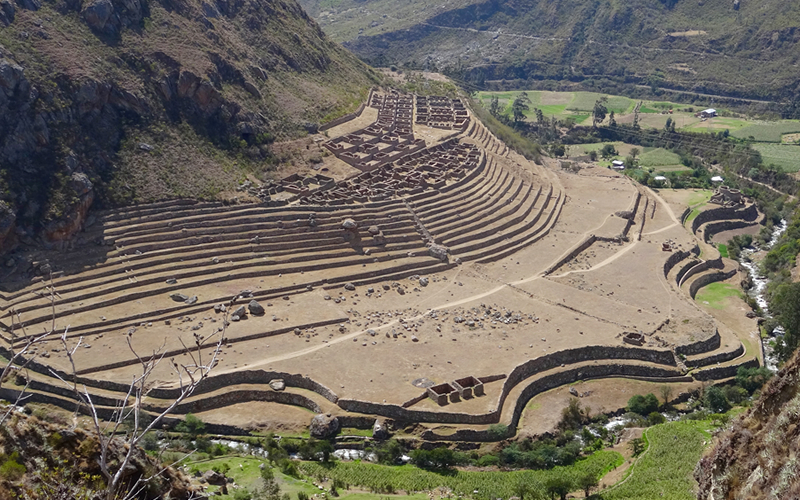
To hike the Inca Trail to Machu Picchu, adventures need to take the train from Cusco to Machu picchu, getting off the train at km 82, from where the Inca Trail Trek begins on the far side of the Urubamba river, after crossing over a hanging bridge.

Along the hills that run at the right hand side of the trail, hikers will soon spot a complex of building known as Quente humming bird in Quechua, Following the route, We will arrive at the Llaqtapata ruins (2300 masl). After crossing the Cusichaca river twice, the trail turns south toward Huayllabamba (2850 masl) an ancient Inca's citadel who protects the entrance to two valleys.

  • Total distance: 12 km (7, 47 miles)
  • Estimated walking time: 5 to 6 hours
  • Maximum altitude point: 3,000 m (9,840 ft)
  • Campsite altitude: 2,850 m (9,840 ft)

Day 2: Huayllabamba - Warmiwañuska Pass - Runcuracay - Pacaymayu

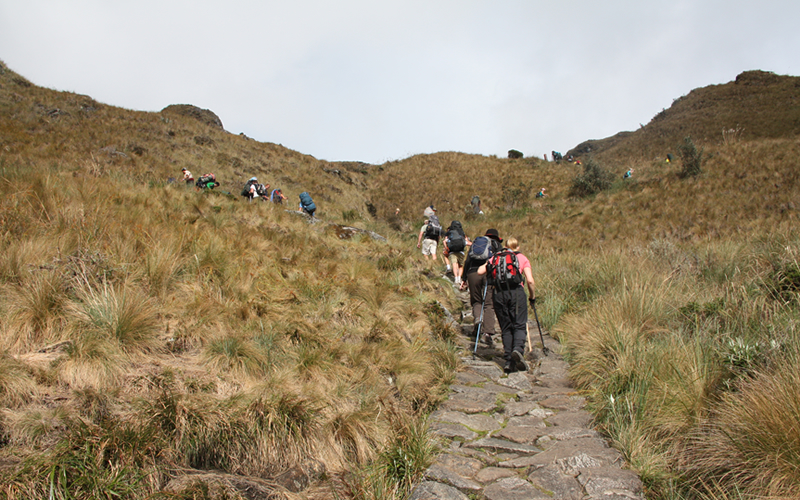
From here on, Nature is the travelers sole companion. The Inca Trail continues to climb in a northwesterly direction through the Llullucha Valley toward the Warmiwañuska Pass the highest point along the trail (4200 masl), The mean in Quechua, is where the woman died, has a local legend attached to it.

From Warmiwañuska pass one spot the ruins of Runcuracay (3,600 masl) and the Pacaymayu river. Once on the top of the pass we go down until second campsite named Pacaymayu at 3,600 m.a.s.l (11,480ft)

  • Total distance: 11 km (6, 84 miles)
  • Estimated walking time: 6 to 7 hours
  • Maximum altitude point: 4,200 m.a.s.l (13,776 ft)
  • Campsite altitude: 3,600 m (11,480 ft)

Day 3: Pacaymayu - Runcuracay - Phuyupatamarca - Wiñayhuayana

From Pacaymayu a sheltered valley studded with trees and cacti. When the path runs climbs again, it showcases Inca engineering in all its magnificence, for a few hours, the path runs amidst a labyrinth of mountains until it reaches the second pass, Runcuracay pass (3,900 masl) before finally descending into the Aobamba valley and the Mysterious cloud forest to the ruins of Sayacmarca (3,700 masl), by means of a stone staircase that is nearly 1,600 m long.

From Sayacmarca, the trail climbs once more, this time gradually, passing by the dry lake Chaqui Cocha and through a 20 meters tunnel hewn into solid rock, arriving at the third and final pass Phuyupatamarca (3,900 masl), walking through the pass, hikers are greeted with an extraordinary view of the Urubamba Valley, then We will go down to Phuyupatamarca ruins (3,600 masl), reached via a spectacular series of staircases cut into the rock and magnificent agriculture terracing. Finally we get last Campsite in the beautiful Wiñayhuayana's Andean village.

  • Total distance: 16 km (9, 94 miles)
  • Estimated walking time: 6 to 7 hours.
  • Maximum altitude point: 3,900 m (12,792 ft)
  • Campsite altitude: : 2,650 m (8,692 ft)

Day 4: Wiñayhuayna - The Citadel of Machu picchu - Cusco

We wake up early!, From Wiñayhuayna (2,700 masl) whose name means u201cforever youngu201d in Quechua. The main trail to Machu picchu sets out from the ruins of Wiñayhuayna at first climbing gradually but then steepening in its final stretch before reaching a small pass.

This is a place covered by tropical plant life, Known as the Intipunku whose name means Sun Gate, here we will be able to enjoy the sunrise up Machu Picchu which is spread out before, an unforgettable experience.

From the Intipunku, the final descent is a quick 35 minutes walk that leads visitors past a small stone tambo into the citadel of Machu picchu, then you'll get plenty of time to take pictures and explore the citadel by yourself of course you can also climb up the Huaynapicchu mountain (2700 m.a.s.l).

On afternoon we go down by bus until Aguas Calientes town where we catch train back to Cusco for around four hours.

  • Total distance: 4 km (2, 49 miles)
  • Estimated walking time: 2 hours.
  • Maximum altitude point: 2,700 m (8,829 ft)
  • Campsite altitude: 2,400 m (7,872 ft)

Includes:

  • Hotel pick up in Cusco.
  • Private bus transportation from Cusco to km 82 (where we start the hiking).
  • Professional Bilingual tour leader (two leaders for groups over 8 people.
  • Porters to carry the company's stuff.
  • Cook and meals (03 breakfasts / 03 lunches / 03 dinners).
  • Camping equipment (tents, mattresses, tables, chairs, kitchen tent and dinning tent).
  • First aid kit and Oxygen balloon.
  • Bus down ticket from Machupicchu to Aguas Calientes town.
  • Entrance fees to Inca Trail and Machupicchu.
  • Train ticket from Aguas Calientes town to Cusco (expedition service).

Not included:

  • Breakfast on first day and lunch on day four
  • Tips for crew (tour leader, cooks and porters)
  • Sleeping bag (can be hired in our office U$ 03 per day)
  • Entrance to visit the hot spring in Aguas Calientes town (10 soles)
  • Porter to carry your personal items 12 kilograms ($ 70)
  • Vistadome train service (U$ 50 pluss)

We recommend bringing:

  • Backpack and sleeping bag
  • Hiking shoes or boots
  • Rain coat and poncho
  • Warmth clothes
  • Insect repellent
  • Sun block, sun glasses and hat
  • Water bottle
  • Water purifying tables
  • Flash light and knife
  • Towel and toilet paper
  • Snacks (chocolates, candies, cookies, etc)
  • Personal Medical Kit
  • Extra national currency (soles)
  • Original passport
  • ISIC Card for students

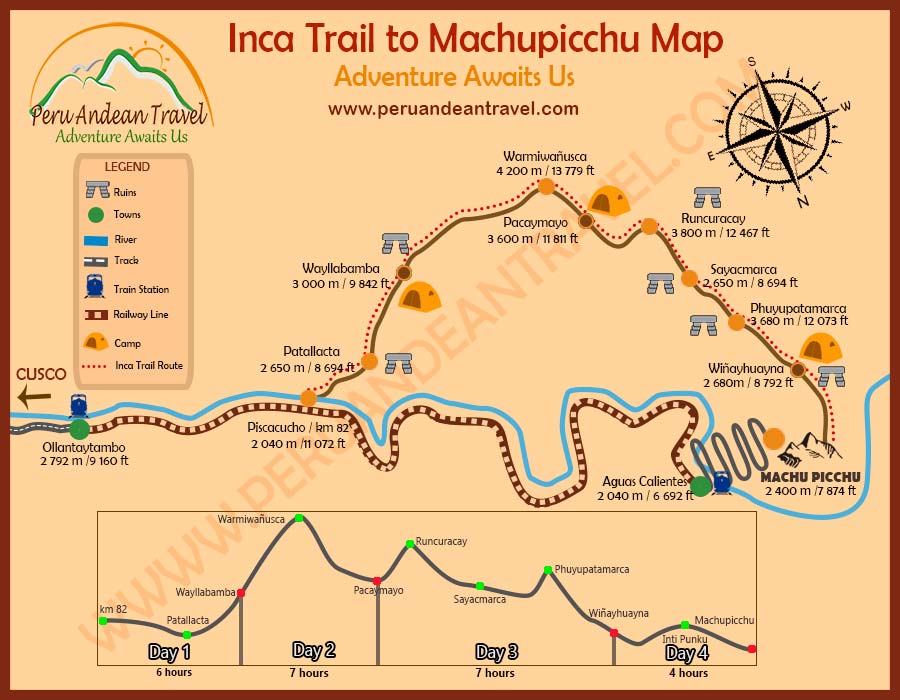
View Map

inca trail trek Map

Frequently Asked Questions

When is the best time to hike the Classic Inca Trail?

The Inca Trail can be hiked almost all year round, except for February, when it is closed for maintenance. The best time to do the trek is between April and October, during the dry season in Cusco. The weather is more stable during these months, with clear skies and breathtaking mountain views. However, it is also the busiest time of the year, so booking at least three months in advance is strongly recommended.

Do I need to book the Inca Trail in advance?

Yes, advance booking is mandatory because access to the Inca Trail is limited to 500 people per day, including guides, porters, and cooks. Permits sell out quickly, especially during the high season. We recommend reserving your spot at least 3 to 5 months ahead of your travel date to ensure availability.

How fit do I need to be to hike the Inca Trail?

The 4-day Inca Trail is considered moderate to challenging. You don’t need to be an athlete, but a decent fitness level is necessary since the trek involves long walking days and steep ascents. The trail reaches up to 4,200 meters (13,779 feet) at the Warmiwañuska Pass. It’s a good idea to do some training hikes beforehand and spend a few days in Cusco prior to the trek to properly acclimatize to the altitude.

What’s included in the Classic Inca Trail package?

The Inca Trail package includes almost everything you’ll need: transportation from Cusco to the starting point, professional guide, full meals (breakfasts, lunches, and dinners), camping equipment, entrance tickets for both the Inca Trail and Machu Picchu, bus from Machu Picchu to Aguas Calientes, and train back to Cusco. You’ll also have porters, a first-aid kit, and oxygen available for emergencies. Sleeping bags and tips are not included, but you can rent or arrange them separately.

Why is the second day considered the hardest?

Day two is the most challenging part of the trek. It involves a steep climb from 3,000 meters to 4,200 meters (13,779 feet) at the famous Warmiwañuska Pass, known as “Dead Woman’s Pass.” The ascent is steady and physically demanding, requiring good stamina and acclimatization. Despite the effort, reaching the summit is incredibly rewarding, offering spectacular mountain views and a great sense of achievement.

What should I pack for the Inca Trail?

You should bring a small backpack with essentials such as comfortable hiking clothes, trekking shoes, a rain poncho, sunscreen, sunglasses, a hat, insect repellent, reusable water bottle, and snacks. Also, pack warm clothing for cold nights and a flashlight or headlamp. Don’t forget your original passport—it’s required to enter the trail. If you don’t have your own sleeping bag, you can rent one from your tour operator.

What kind of food is provided during the trek?

Meals during the trek are freshly prepared by professional cooks using local ingredients. You’ll enjoy nutritious and balanced meals including soups, main dishes, hot drinks, and desserts. Vegetarian and special diets can be accommodated if requested in advance. Meals are served in a dining tent, providing a comfortable experience even in the middle of the mountains.

Can I do the Inca Trail without a guide?

No, hiking the Inca Trail without a licensed guide is not allowed. The Peruvian Ministry of Culture strictly regulates access to protect its archaeological and natural heritage. Only authorized tour operators with certified guides are permitted to lead groups on the trail. This ensures safety, environmental care, and preservation of the Inca sites along the route.

What if I can’t get a permit for the Inca Trail?

If permits are sold out, there are fantastic alternative treks to Machu Picchu that don’t require special permits. The Salkantay Trek, Lares Trek, and Choquequirao Trek are all excellent options. Each offers incredible mountain scenery, cultural experiences with local communities, and a rewarding sense of adventure while still ending at the majestic Machu Picchu.

Do I visit Machu Picchu at the end of the Inca Trail?

Yes! On the last day, you’ll arrive at Machu Picchu through the Sun Gate (Inti Punku), where you can enjoy a breathtaking panoramic view of the Inca citadel. Afterward, you’ll take a guided tour to explore the ruins and learn about its fascinating history. Later, you’ll descend by bus to Aguas Calientes and return to Cusco by train. If you’d like to climb Huayna Picchu or stay an extra day, it’s possible by requesting it in advance.

Related Tours!