

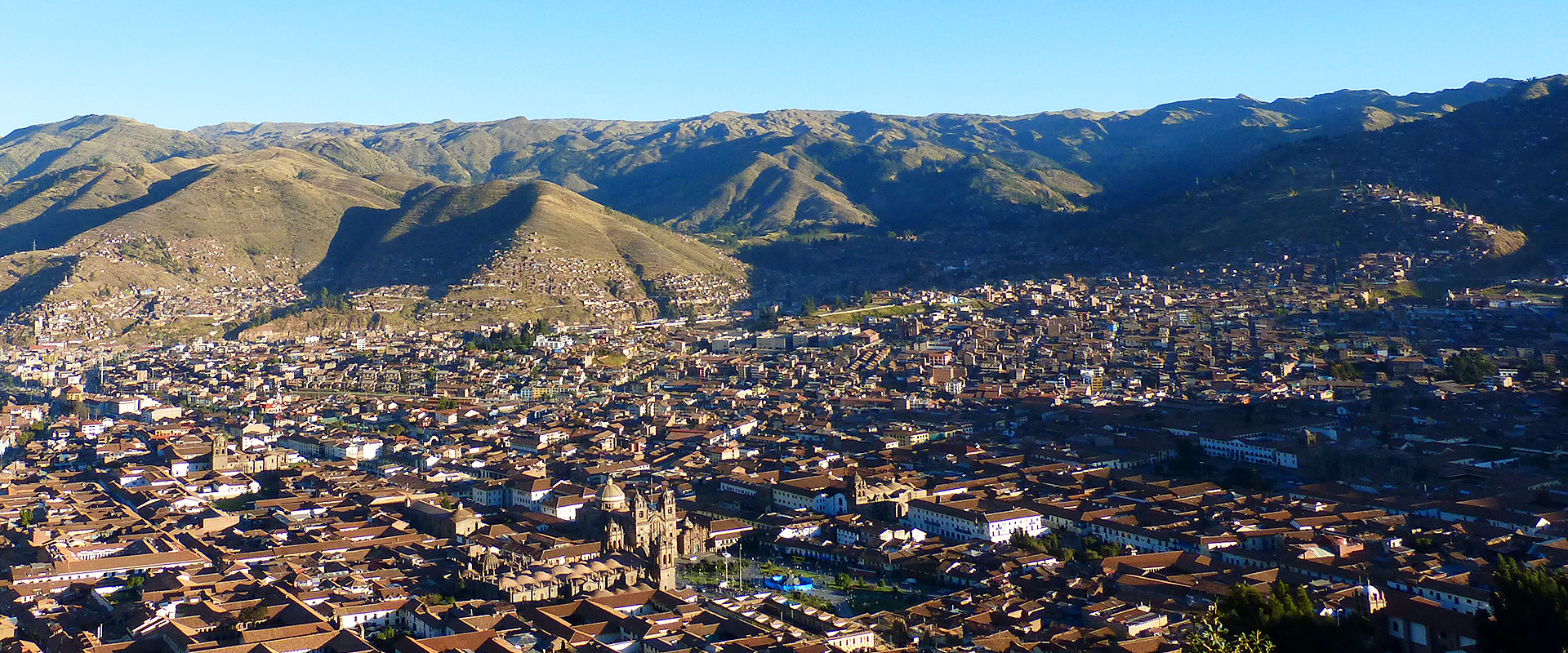
Cusco Destinations, Peru’s principal Tourist Attractions is Cusco where the mixture of cultures can be seen in every corner of city, because most existing building are erected on Inca foundations, the capital of the Incas is an open air museum. Culture and tradition wrap the traveller in an unforgettable experience.
Cusco Tourist Attractions give a complete panorama of the Cusco Tours City and Tourist destinations; You will find general information on each tourist attractions and seeks to promote the natural, archaeological, historical and cultural attractions of Cusco. Other tourist Attraction in South Coast of Peru is Paracas National Reserve.
The city of Cusco, capital of the department of the same name, lies in the Huatanay river valley in the southern highland of Peru, Cusco is located in Southern Peru, It is at 3650 masl. Cusco known to the Incas as the navel of the world, capital of the Tawantinsuyo, was the hub of a network extending to each of the four Suyus (regions), that formed the four parts of the world according to the Incas world view.
The Incas believed Cusco to be a dwelling place of the gods and it is certainly one of the most fascinating cities in the Peruvian Andes. Cusco is one of South America´s biggest tourist destinations like Puno Tourist Attractions too; it is called the archeological capital of South America, as its proximity to the Inca Citadel of Machu Picchu makes it one of the world´s principal travel destinations.
Cusco Tourist Attractions:
Machu Picchu Peru
Machu picchu is Located 120 km northwest of Cusco, overlooking the Urubamba River, The Inca Citadel of Machupicchu is one of the world´s archeological jewels and a principal travel destinations in Peru. The archeological complex is strategically located on the summit of Machupicchu mountain (old mountain) which gives the citadel its name and its spectaculars setting.
Behind it rises the towering peak of Huaynapicchu (young mountain) whose flanks and summit also hold archeological ruins. The torrential Urubamba river passes the feet of both peaks as it flows eastward some 400m below the citadel.
Machupicchu archeological significance is enhanced by the natural beauty of the surrounding landscape. The lush cloud forests covering the steep slopes of the mountains framing this magical place are home to countless species of flora and fauna, including delicate orchids, bromeliads and three ferns.
The Town nearest to Machupicchu Peru is Aguas Calientes you will find in Aguas Calientes hotels and tourist services, There are also the well known hot spring baths that give the town its name. The most common approach to Machu Picchuis by rail.
Sacred Valley of the Incas
If you love nature or adventure sports, there is one place on your visit to Cusco that you can’t miss: The sacred valley of the Incas, you can visit to the small villages scattered throughout the valley offer an incredibly close look at a simple and ancient way of life.
Take part in the haggling over produce and handicrafts at the markets in Pisac or Chinchero, or peak into a dimly lit colonial chapel in time for the Sunday mass in Quechua. Visit Urubamba, which considers itself the world capital of corn, or Ollantaytambo, with its breath taking ancient “Temple of the Sun” and maze of narrow streets laid out on an Inca framework.
Wander through the Salinas sparking salt pools that have been in use since Inca times or any number of lesser known ruins to be found throughout the region, such as those at Pisac .
The sacred valley’s landscape may call to mind any number of scenic locals but you won’t find its particular combinations of history and authentic, living culture any where else in the world.
Cusco City
Cusco capital of the Tawantinsuyo or Inca culture, it considered to be sacred, as placed of residence of the sovereign, the Inca. There is a lot to see. Its historical Main square where Francisco Pizarro proclaimed the conquest of Cusco and which is surrounded by beautiful stone arcades.
The cathedral of Cusco is also impressive, the neighborhood of San Blas, is one of the most picturesque and is the craftsmen’s quarter, the church and convent of Santo Domingo was built by the Spaniards on the foundations of the Inca temple of Qoricancha or the temple of the Sun, which was the main religious, centre where the Incas worshiped the Sun, whose internal walls were covered with sheets of gold.
Two blocks from the main square is the Inca Roca palace, where the famous “twelve cornered stone” can be seen in Hatunrumiyoc street.
The old City center of Cusco is small and easily accessible. Beyond a shadow of a doubt, the best way to explore the city is on foot. However, the step streets can turn a simple walk into an exhausting hike, especially if visitors have not adapted to the altitude.