
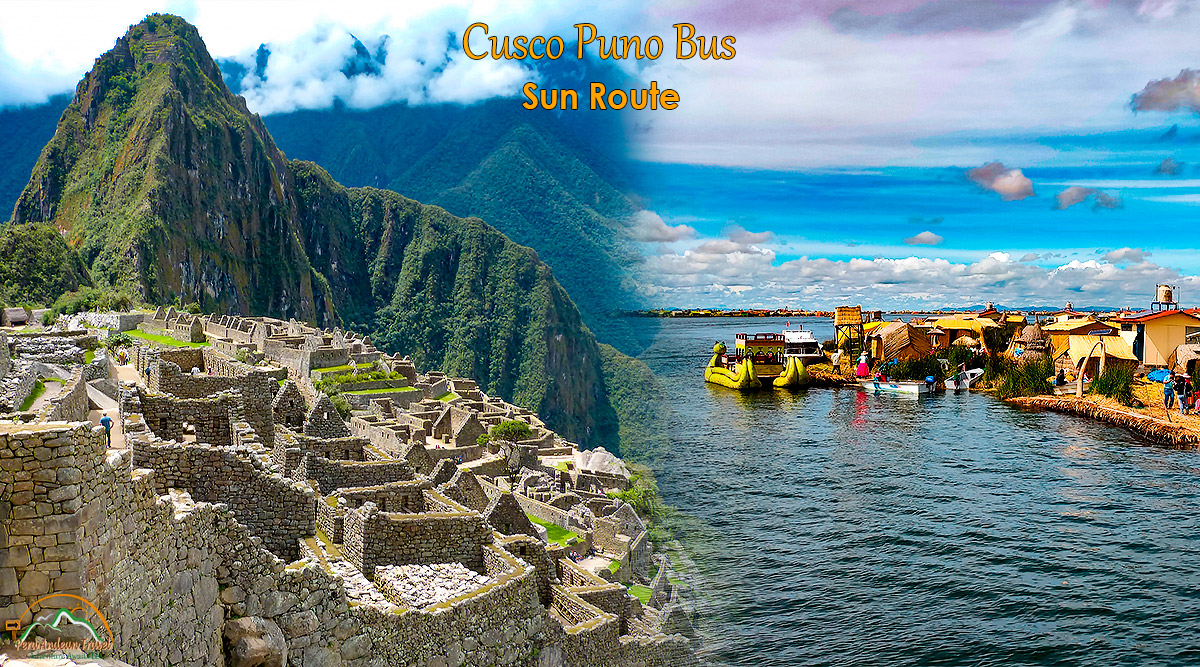
Route of the Sun Peru: Scenic Journey from Cusco to Puno in 2026 is one of the best options for tourist buses, allowing visitors to explore the main attractions between Cusco and Puno.
This blog provides complete and up-to-date information about each tourist attraction along the Cusco-Puno route by bus.
Cusco and Puno are home to significant tourist sites, such as Machu Picchu and Lake Titicaca. As a result, both cities experience a high volume of visitors, and many tourists choose to visit Cusco first before heading to Puno.
These two cities are historically connected by the Sun Route, and the tips provided for visiting Machu Picchu and Puno will help travelers effectively plan their itineraries during their trip to southern Peru.
To make the most of your sightseeing opportunities, taking the bus from Cusco to Puno is an ideal choice. Along the way, you will visit notable attractions such as the Church of Andahuaylillas—often referred to as the Sistine Chapel of America—the Inca Archaeological Complex of Raqchi, the Abra de la Raya, and the Lithic Museum of Pukara.
Description of the Cusco-Puno Sun Route:
The tourist bus from Cusco to Puno takes approximately 10 hours to travel a total distance of about 386 kilometers. The highest point of the journey is at La Raya Pass (or Abra de la Raya), which stands at 4,338 meters above sea level, while the lowest point is Andahuaylillas, at 3,093 meters above sea level.
This tourist bus service includes four guided tour stops and one stop for lunch, making a total of five stops along the way. Horarios del Bus Turístico Cusco Puno:
- Boarding Time: 6:40 am
- Departure Time: 7:00 am
- Arrival Time: 5:00 pm
Arrival times may vary and be delayed due to factors like traffic, visit delays, or weather.
Tourist Attractions Between Cusco and Puno:
Andahuaylillas: The Sistine Chapel of America
The Church of Andahuaylillas, officially named the Church of San Pedro de Andahuaylillas, is situated south of the city of Cusco, in the Quispicanchis province, within the district of Andahuaylillas.
Built by the Jesuits in the late 16th and early 17th centuries, it presents a modest appearance from the outside. However, the interior of the church is a treasure trove of colonial art, showcasing the work of prominent masters from that era.
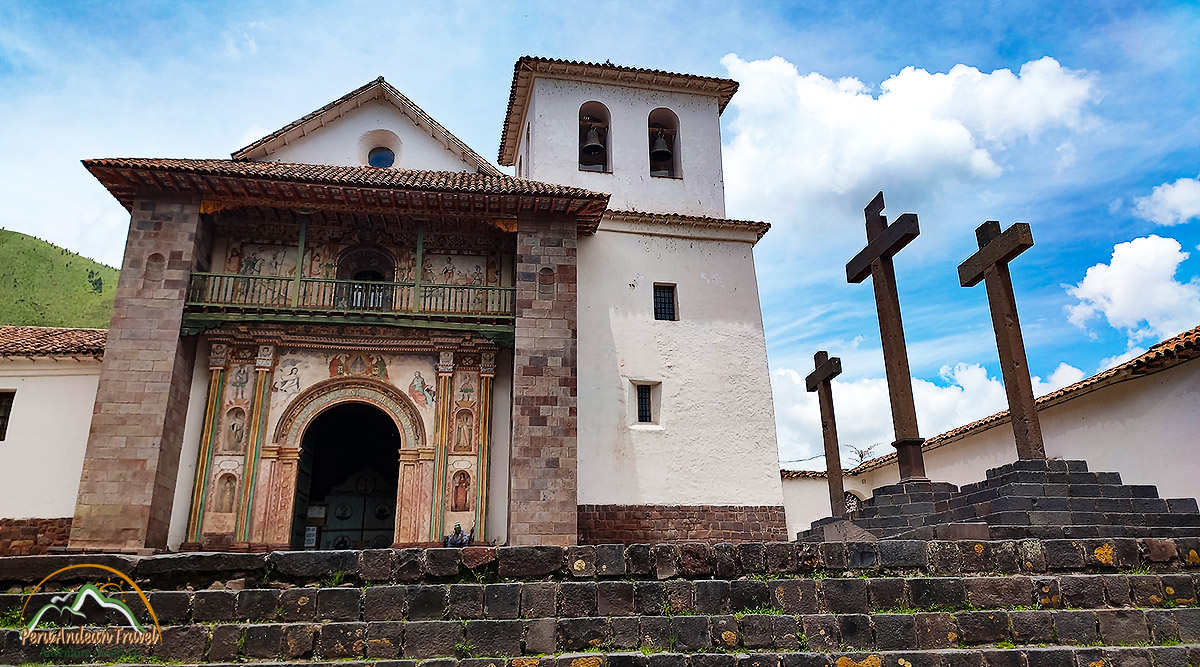
For this reason, the Church of Andahuaylillas is often referred to as the Sistine Chapel of the Americas.
Inside, visitors can admire murals attributed to the artist Luis de Riaño, along with examples of colonial Cusco painting and Mudéjar-style decorations, which represent a blend of Arab and Christian artistic styles that developed in Spain. One of the church's most striking features is its location in the main square, surrounded by large Pisonay and palm trees that add vibrant color to this charming Andean town.
Andahuaylillas is a unique destination due to its favorable climate, rich history, and tourist attractions, which make it an essential stop along the Ruta del Sol (Route of the Sun).
In 2025, it was designated a Category 4 attraction—an important recognition, as it became the first viceregal Catholic church in Cusco to achieve this status. For context, this designation is significant because it is located near Machu Picchu Mountain, close to the Inca archaeological site, which also holds Category 4 status.
 Distance from Cusco: The Church of Andahuaylillas is located 40 km from Cusco. You can reach it by taking a tourist bus from the terminal to Puno.
 Travel Time from Cusco: The travel time by tourist bus from Cusco to the Church of Andahuaylillas is approximately 1 hour and 40 minutes.
 Guided Tour: The guided tour of the church lasts for 40 minutes.
 Visiting Hours: The Church of Andahuaylillas is open to visitors from 8:00 AM to 5:00 PM, Monday to Sunday.
 Entrance Fee: The entrance fee is S/ 18.00 soles.
 Altitude of Andahuaylillas: The church is situated at an altitude of 3,093 meters above sea level.
 Additional Details: Please note that photography and filming are not permitted inside the church.
Raqchi: the Temple of the God Wiracocha
The Raqchi archaeological complex is located in the San Pedro District within the Canchis Province of the Cusco Department. It is also known as the Temple of Wiracocha, the creator god of the Andean world. This site is notable for its Inca construction.
Raqchi is divided into several key sectors, including agricultural areas, ritual or liturgical centers, and urban centers. It is recognized as one of the largest and most significant Inca sites located south of the city of Cusco.
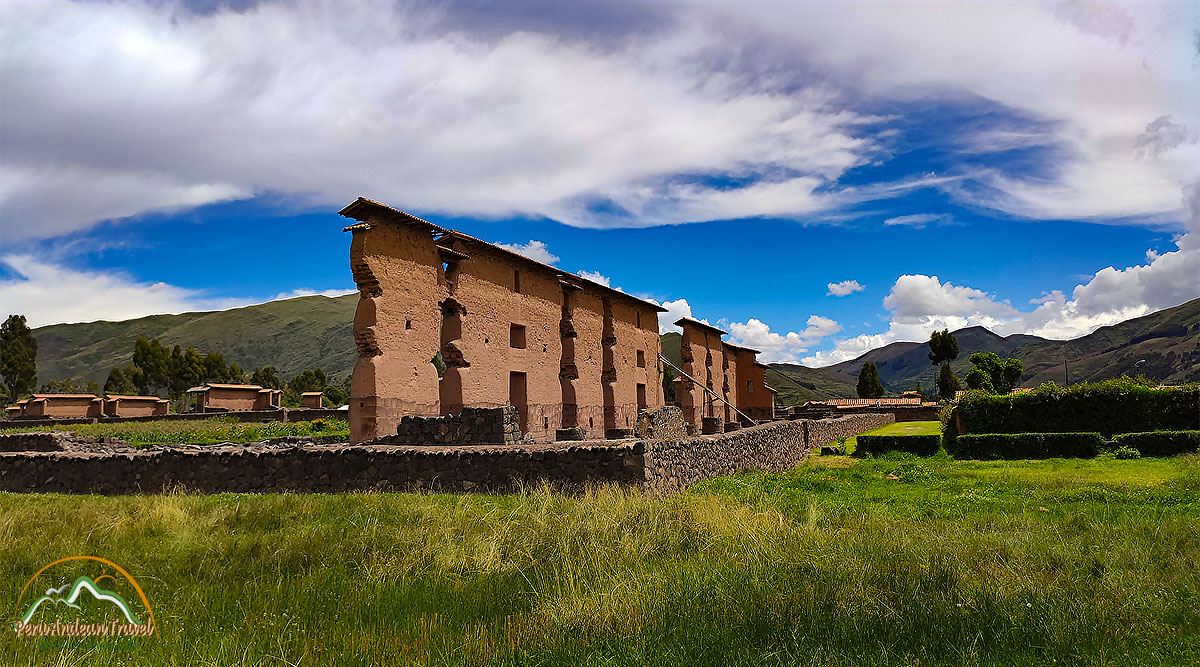
One of the most important structures within the complex is the Temple of Wiracocha, which is centrally located. This temple features a rectangular floor plan with carved stone foundations and mud walls. It measures 92 meters in length and 26 meters in width, with columns that reach heights of 18 to 20 meters.
Sacred sites were spread throughout Inca territory, some dedicated to deities, rivers, or mountains, while others served as astronomical observatories, such as the one on Huayna Picchu Mountain at Machu Picchu.
Another significant area within Raqchi is the colca, or food storage sector. This area contains between 160 and 200 food storage structures from the Inca era. These structures have a circular floor plan, measuring 8 meters in diameter and 4 meters in height.
Distance from Cusco: Raqchi is 122 km from Cusco. It is located south of Cusco, in the direction of Qollasuyo or Puno.
Travel Time from Cusco: The trip to Raqchi takes approximately 3 hours and 20 minutes, and from the church in Andahuaylillas to Raqchi, it takes approximately 2 hours.
Guided Tour: The guided tour of Raqchi lasts 40 minutes.
Visiting Hours: Raqchi is open from 7:00 am to 5:00 pm, Monday to Sunday.
Entrance Fee: The entrance fee to Raqchi is S/ 20.00 soles.
Altitude: Raqchi is located at an altitude of 3,460 meters above sea level.
Additional Details: At the entrance, you will find the colorful Raqchi artisan market and restrooms.
La Raya Pass: The highest point between Cusco and Puno.
La Raya Pass, also known as the Cusco-Puno Pass, is the border between the Cusco and Puno departments. It is the highest point along the Ruta del Sol (Route of the Sun). Here, numerous artisans offer their crafts to travelers passing through.
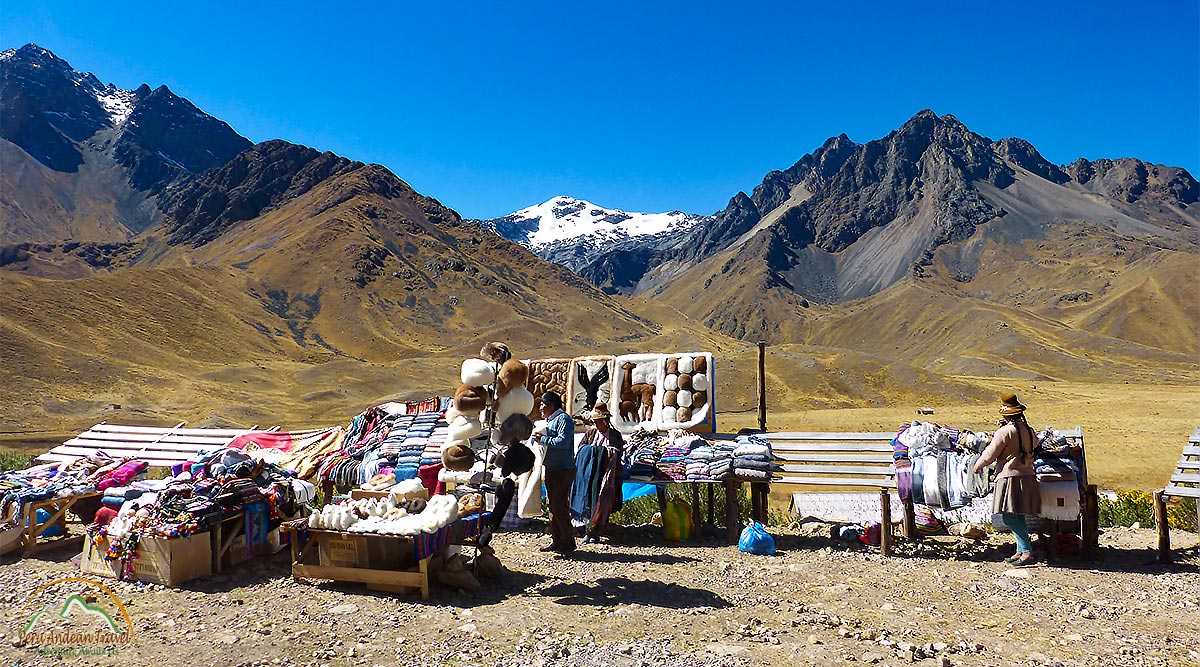
At this location, you can enjoy views of the Ausangate mountain range, with one of its most prominent peaks being Chimboya, which rises to 5,489 meters above sea level. The predominant vegetation in this area is ichu grass. Additionally, you may spot Andean camelids such as llamas and alpacas. Due to the harsh climate, traditional Andean agriculture is not very viable in this region.
Distance from Cusco: The La Raya Pass (or Abra de la Raya) is located 178 km from both Cusco and Puno.
Travel Time from Cusco: The tourist bus ride from Cusco to La Raya Pass takes approximately 5 hours.
Visit at La Raya Pass: We will make a stop of 10 to 15 minutes at this location.
Altitude of La Raya Pass: The altitude is 4,335 meters above sea level.
Additional Details: It is recommended to dress warmly due to the high altitude and cold winds. Don't forget to bring sunglasses, as you can find local artisans in this area.
Pucara Lithic Museum: A pre-Inca culture in the Peruvian highlands
In this museum, visitors can find several monoliths and stone sculptures featuring anthropomorphic and zoomorphic figures, among which the figure of the Decapitator, or Hatun Ñakaj, stands out. Its main characteristic is that it has figures of the decapitated heads of its victims on its back. The museum also displays stelae dedicated to lightning, rain, and fish.
All of these monoliths and ceramics belong to the Pukara culture, which developed in the highlands, with its main center at Kalasaya. Kalasaya served as a religious and administrative hub, divided into several sectors, with the sunken rectangular plaza being particularly noteworthy. This plaza may have been used for rituals to honor their deities.
Distance from Cusco to Pucara: The distance from Cusco to Pucara is 280 kilometers.
Travel Time from Cusco: Traveling from Cusco to Pucara by tourist bus will take approximately 6 hours.
Stop in Pucara: We will make a 30-minute stop in Pucara.
Visiting Hours: The Pucara Lithic Museum is open from 8:30 a.m. to 5:30 p.m.
Entrance Fee: The entrance fee to Pucara is S/15.00.
Altitude at Pucara: The altitude is 3,894 meters above sea level.
Additional Information: You can enjoy delicious coffee from the Puno jungle, which is famous and has won awards worldwide.
FAQs Route of the Sun Cusco Puno
What is the Cusco-Puno Sun Route?
The Cusco-Puno Sun Route is a scenic bus tour that connects the cities of Cusco and Puno. Along the way, tourists have the chance to explore several important attractions, including the Church of Andahuaylillas, the Raqchi Archaeological Complex, the Paso de la Raya, and the Pucara Lithic Museum.
What is the duration of the Tourist bus on the Ruta del Sol?
The bus journey from Cusco to Puno along the Ruta del Sol takes about 10 hours and covers a distance of 386 km. During the trip, several stops are made to visit key tourist attractions.
What are the main tourist attractions along the Ruta del Sol?
Some of the main tourist attractions along the Sun Route include the Church of Andahuaylillas, often referred to as the Sistine Chapel of America, the Raqchi Archaeological Complex, the Paso de la Raya, and the Lithic Museum of Pucara, which provides insights into pre-Incan cultures.
What are the schedules for the tourist bus from Cusco to Puno?
The Cusco-Puno tourist bus departs at 7:00 AM from the Cusco terminal, with boarding starting at 6:40 AM. The estimated arrival time in Puno is 5:00 PM, but this may vary due to traffic or weather conditions.
What is the maximum altitude of the Ruta del Sol?
The highest point along the Ruta del Sol is at Paso de la Raya, reaching an altitude of 4,338 meters above sea level. This is the tallest point on the journey between Cusco and Puno.
What does the Cusco-Puno tourist bus service include?
The service includes stops at four key tourist attractions along the route, as well as a lunch break. The stops are located in Andahuaylillas, Raqchi, Abra de Raya, and the Pucara Lithic Museum.
What can you visit at the Church of Andahuaylillas?
The Church of Andahuaylillas, known as the Sistine Chapel of the Americas, is famous for its stunning colonial art, including murals attributed to Luis de Riaño, and its Mudéjar-style ornamentation. The Pisonay trees and palm trees surrounding the church are also a sight to behold.
What is the Raqchi Archaeological Complex?
The Raqchi Archaeological Complex, also known as the Temple of Wiracocha, is an important Inca site located south of Cusco. It features various sectors, including the main temple, food storage facilities (colcas), and both urban and ritual structures.
What can you observe at Paso de la Raya?
The Paso de la Raya serves as the border between Cusco and Puno. This area is renowned for its breathtaking scenery, featuring views of the Ausangate mountain range and the snow-capped Chimboya peak. It is also a popular location where local artisans sell their crafts to travelers..
What is the Pucara Lithic Museum?
The Pucara Lithic Museum features a diverse collection of monoliths and stone sculptures from the Pucara culture. Among these are anthropomorphic and zoomorphic figures, including the renowned Hatun Ñakaj, which depicts a decapitator. The museum also displays stelae dedicated to lightning, rain, and fish.
Leave us your comment